Sustainable Packaging Design: Materials, Innovation, and Implementation?
Choosing the right sustainable packaging design feels overwhelming when every supplier claims their material is the greenest option. The confusion deepens when regulations differ by market, certifications overlap, and a wrong material switch can derail your entire product launch timeline. The answer isn't picking a trendy material — it's matching your specific constraints to a packaging system that actually delivers on sustainability claims.
Sustainable packaging design is not about selecting a single "eco" material. It is a system-level decision that matches material properties, certification requirements, logistics constraints, and end-of-life realities to your specific product and market. The most effective approach starts with defining your functional and regulatory constraints first, then narrowing materials — not the other way around.
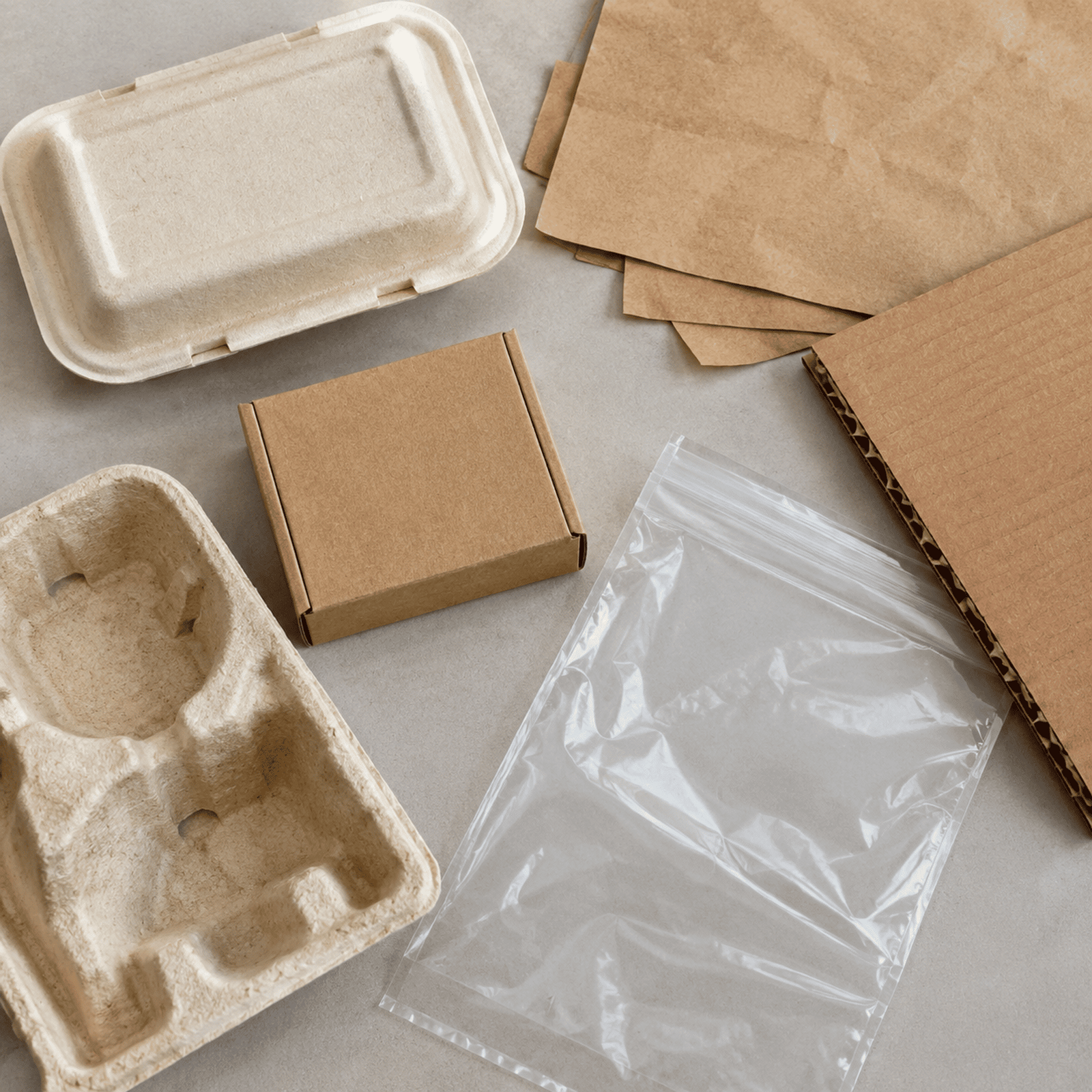
In our production experience handling hundreds of sustainable-packaging projects since 2016, I've watched brands succeed and stumble based on how they sequence their decisions. Below, I break down the key questions procurement and brand managers should ask — before they ever request a sample.
Why Is Sustainable Packaging Design a System Decision, Not a Material Choice?
Most buyers start their sustainable packaging journey by asking about a specific material: sugarcane fiber, recycled kraft, compostable PLA. It sounds logical. But choosing a material before defining the job it must do is the single most common procurement mistake I see. It leads to wasted samples, missed deadlines, and packaging that fails in the field.
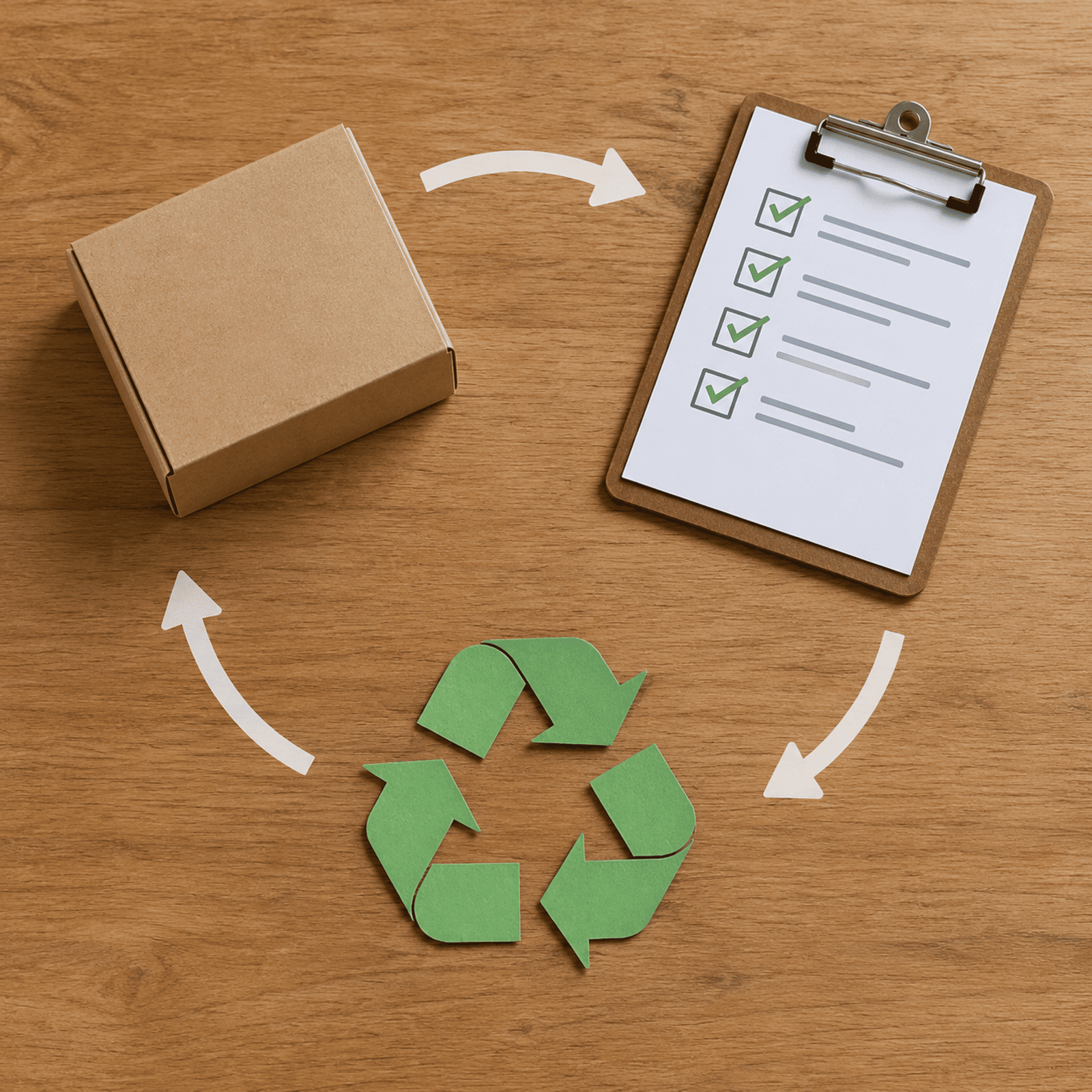
The most reliable sustainable packaging design treats sustainability as a system outcome — the result of matching the right material to the right structure, print method, certification, logistics route, and end-of-life infrastructure. No material is universally "green." Every material is green in context or wasteful out of context.
What Does "System Outcome" Actually Mean?
Let me give you a scenario from our daily work. A US-based DTC skincare brand asked us to replace their poly mailers with kraft paper mailers. On the surface, it sounded like a clear sustainability win — paper instead of plastic. But their products ship through humid warehouse environments in the southeastern US during summer. The kraft paper absorbed moisture, weakened in transit, and the brand ended up double-bagging each order with an inner PE sleeve to protect the product.
The "sustainable" switch actually increased total material usage and cost. A better system-level answer was a GRS-certified recycled poly mailer with a clear end-of-life instruction printed on the bag, directing consumers to store drop-off recycling.
The Three Layers of a Packaging System
When I evaluate a sustainable packaging project with a buyer, I think in three layers:
| Layer | Key Questions | Example Trade-Off |
|---|---|---|
| Functional | Does it protect the product? Does it survive the supply chain? | Kraft paper vs. PE for moisture-sensitive goods |
| Regulatory & Retail | Does it meet market-specific requirements (EU Packaging Regulation, Walmart Project Gigaton1, Amazon frustration-free2)? | A material "compostable" in EU industrial facilities may have no composting pathway in most US municipalities |
| End-of-Life | Can the consumer actually dispose of it as intended? Is the infrastructure available? | PLA is "compostable" but most US curbside programs reject it3 |
Key takeaway: If any one layer fails, the sustainability claim collapses — no matter how impressive the material sounds on a spec sheet.
Where Naive Substitutions Backfire
Here are the substitution patterns I see create problems most frequently:
- Paper replacing plastic film for food-contact packaging — often requires additional coatings (PE or PLA lamination) that make the paper non-recyclable in standard paper streams.
- Uncoated kraft boxes for cosmetics — scuffing and oil absorption during transit damage brand presentation, leading to returns and reshipments.
- Thin-wall sugarcane/bagasse containers shipped long distances — high breakage rates increase waste and replacement costs.
- "Biodegradable" additives in PE bags — these often fragment into microplastics rather than truly composting, and several EU markets are moving to restrict such claims4.
The lesson is consistent: define the constraints, then match the material. Not the reverse.
What Do FSC, PEFC, GRS, and OEKO-TEX Certifications Actually Guarantee?
Certifications are the currency of trust in sustainable packaging procurement. But a common question we receive from US brand managers is: "We need FSC — does that cover everything?" The short answer is no. Each certification has a specific, limited scope. Conflating them creates compliance gaps and marketing risk.
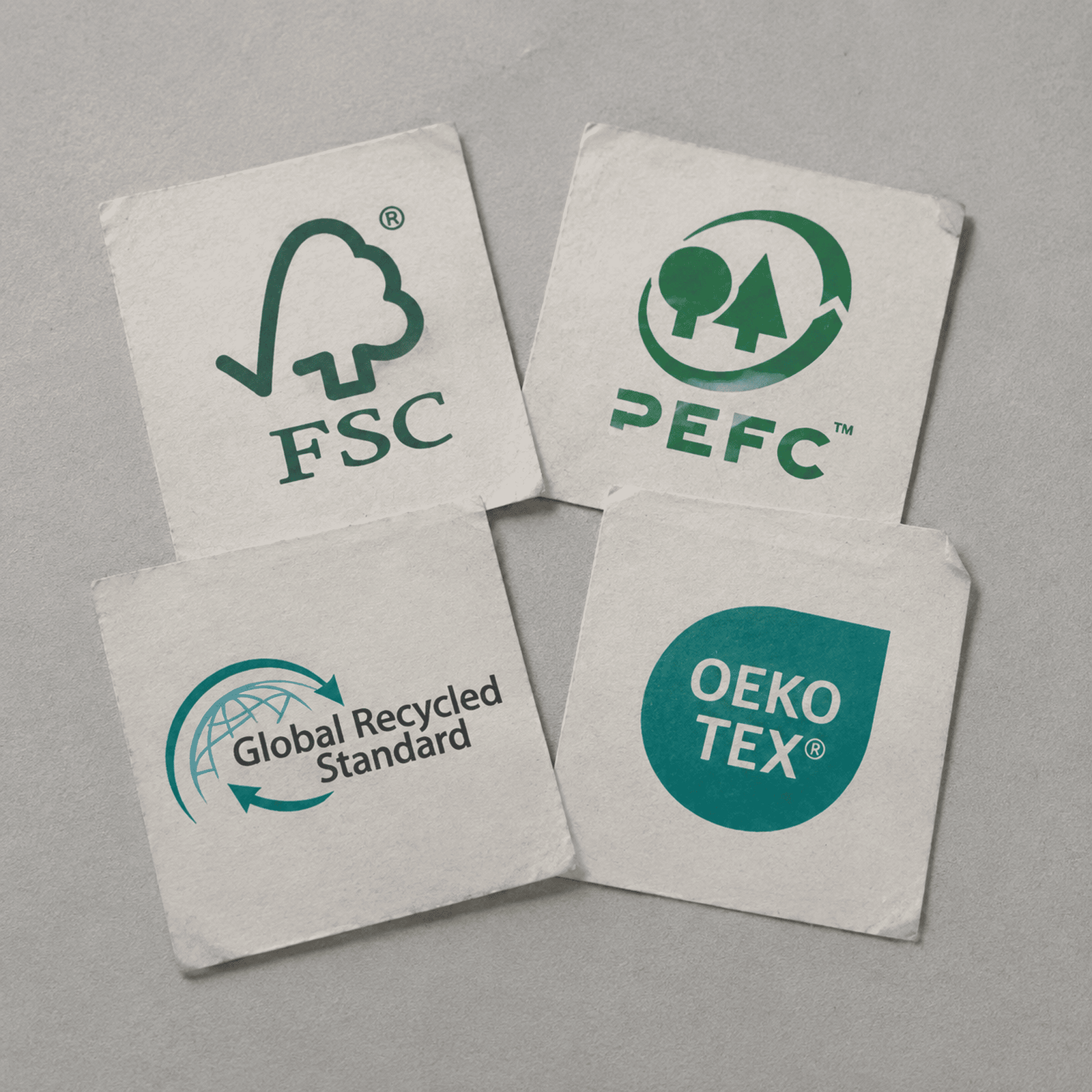
Certifications in sustainable packaging design prove chain-of-custody and specific process standards. They do not prove overall environmental superiority. FSC and PEFC verify responsibly managed forest sourcing. GRS verifies recycled content. OEKO-TEX verifies the absence of harmful substances. Each answers a different buyer question, and none replaces the others.
Certification Scope Breakdown
| Certification | What It Guarantees | What It Does NOT Guarantee | Typical Buyer Need |
|---|---|---|---|
| FSC (Forest Stewardship Council) | Paper/board sourced from responsibly managed forests; chain-of-custody tracked | Carbon footprint, recyclability, or compostability of the finished package | Retailer mandates (Walmart, Target); EU Deforestation Regulation compliance |
| PEFC (Programme for Endorsement of Forest Certification) | Similar forest management standards; broader global coverage than FSC in some regions | Not interchangeable with FSC for retailers that specify FSC by name | Markets where PEFC acceptance is equivalent to FSC (common in Northern Europe) |
| GRS (Global Recycled Standard) | Minimum recycled content verified; social and environmental processing standards | Does not certify the material is recyclable after use | Brands making "made from X% recycled content" claims on packaging |
| OEKO-TEX | Tested for harmful substances in textiles and textile-adjacent materials | Not a sustainability or recycled-content certification | Cotton bags, drawstring bags, ribbon, and textile packaging in contact with skin or children's products |
Why Buyers Must Verify — Not Assume
I hold FSC, PEFC, GRS, and OEKO-TEX certifications at our facility in Guangzhou, and I still tell buyers: verify the certificate number, check the expiry date, and confirm the specific product category covered. Certifications apply to defined product scopes. A supplier certified for FSC paper boxes is not automatically certified for FSC paper bags unless the scope explicitly includes them.
A few practical verification steps I recommend:
- Request the actual certificate document — not just a logo on the supplier's website.
- Cross-check the certificate number on the issuing body's public database (e.g., info.fsc.org for FSC).
- Confirm the product scope listed on the certificate matches what you're ordering.
- Check the validity period — expired certificates are surprisingly common in sourcing.
Matching Certifications to Market Requirements
Different markets and retail channels have specific certification preferences:
- US mass retail (Walmart, Target): Often requires FSC or SFI for paper-based packaging; increasingly asking for recycled-content verification.
- EU market (especially Germany, Nordics): Strong preference for FSC or PEFC; upcoming EU Packaging and Packaging Waste Regulation (PPWR) will tighten recyclability and recycled-content mandates.
- Amazon: Frustration-Free Packaging program focuses on right-sizing and recyclability, not specific forest certifications.
- Australian market: Growing retailer-driven demand for FSC; national packaging targets under APCO (Australian Packaging Covenant Organisation)5.
Bottom line: Your certification strategy should be driven by your sales channels and target markets, not by what your supplier happens to hold. Ask your retail partners what they require, then work backward to the supplier.
How Should Buyers Sequence Material Decisions to Avoid Costly Mistakes?
The procurement trap I see most often goes like this: a brand manager attends a trade show, sees an impressive sugarcane-fiber box, and emails us asking, "Can you make this for our product?" Before we even know the product weight, shipping route, or retail shelf requirements. This material-first approach wastes weeks of sampling and quoting — and sometimes months when the chosen material turns out to be infeasible.
The most effective sustainable packaging design process reverses the typical sequence. Instead of choosing a material and then testing feasibility, buyers should define their functional requirements, regulatory constraints, and logistics realities first — then let the material options emerge from those parameters.
The Constraint-First Framework
Here is the sequence I walk buyers through in practice:
Step 1: Define the protection job.
- What is the product? (Weight, fragility, moisture sensitivity, temperature sensitivity)
- What are the transit conditions? (Ocean freight duration, warehouse humidity, last-mile carrier handling)
- What is the unboxing experience expectation? (Premium feel, minimal waste, easy open)
Step 2: Map the regulatory and retail requirements.
- Which markets will this packaging enter?
- What do your retail partners or e-commerce platforms require?
- Are there specific claims you need to make on-pack ("recyclable," "made from X% post-consumer waste," "FSC-certified")?
Step 3: Identify end-of-life realities.
- In your primary market, what disposal infrastructure actually exists? (Curbside recycling, industrial composting, store drop-off)
- Will the consumer understand how to dispose of it correctly?
Step 4: Now narrow the material set.
- Which materials meet all three preceding layers?
- What are the MOQ, tooling, and lead-time implications of each option?
- What is the total switching cost — not just the per-piece price?
A Practical Example
A Canadian wellness brand came to us needing packaging for a subscription box shipped monthly across Canada — including winter conditions where packages sit on porches in sub-zero temperatures and spring conditions with heavy rain.
Following the constraint-first approach:
- Protection job: Box must withstand temperature extremes, moisture, and rough carrier handling. Contents include glass bottles.
- Regulatory: Canadian market; brand wanted to claim "recyclable" on the box.
- End-of-life: Canada has strong curbside recycling infrastructure for corrugated cardboard.
- Material result: We landed on FSC-certified corrugated board with a water-based coating (recyclable in standard paper streams), plus molded pulp inserts for glass protection. No plastic films, no lamination.
If the buyer had started by requesting sugarcane boxes — which was their initial instinct — we would have spent weeks sampling a material that couldn't handle the structural requirements of heavy glass bottles in corrugated transit conditions.
What Is the True Cost of Switching to Sustainable Packaging?
One of the most damaging myths in sustainable packaging is that it's "basically the same price now." Sometimes it is. Often it is not. And even when the per-piece price is close, the total switching cost includes factors most procurement teams underestimate.
The true cost of implementing sustainable packaging design extends far beyond unit price. It includes MOQ changes, new tooling or die costs, extended sampling timelines, potential lead-time increases for specialty materials, and the cost of defending your sustainability claims if challenged by regulators or competitors.

Mapping Total Switching Cost
| Cost Factor | What Changes | Impact Level |
|---|---|---|
| Unit price | Some sustainable materials cost 10–30% more; some (recycled kraft) can be cost-neutral | Medium |
| MOQ | Specialty substrates (sugarcane, bamboo fiber, stone paper) often require higher MOQs due to limited supplier base | High — can lock out small-batch brands |
| Tooling/dies | New material may require different die-cutting specs, structural engineering, or print adjustments | Medium |
| Sampling timeline | Unfamiliar materials need more sample iterations to validate print quality, structural integrity, and transit performance | High — can add 2–4 weeks |
| Lead time | Specialty raw materials may have longer procurement cycles, especially during supply-chain disruptions | High — missed selling seasons are the biggest hidden cost |
| Claim defensibility | If you print "compostable" or "recyclable," you need documentation to back it up; FTC Green Guides (US) and EU Green Claims Directive are tightening enforcement | High — legal and reputational risk |
Where Cost Savings Are Real
Not every sustainable switch costs more. In our production experience, these transitions often deliver cost parity or savings:
- Right-sizing boxes to eliminate void fill — reduces material, shipping weight, and dimensional weight charges.
- Switching from virgin kraft to FSC-certified recycled kraft — pricing is competitive and sometimes lower, depending on grammage.
- Replacing rigid boxes with well-designed folding cartons — reduces material, freight volume, and storage cost.
- Consolidating packaging SKUs — fewer unique box sizes means longer print runs, lower unit cost, and less warehouse complexity.
Where Cost Increases Are Honest
These transitions typically come with a real cost premium that buyers should budget for:
- Post-consumer recycled (PCR) content in poly bags — GRS-certified recycled PE film currently runs 15–25% above virgin PE6, depending on market conditions.
- Compostable mailers (PLA/PBAT blends) — significant premium, plus limited supplier base and longer lead times.
- Water-based inks and coatings replacing solvent-based — slight cost increase, but often required for recyclability claims on paper packaging.
- Custom molded pulp inserts replacing EPS foam — higher tooling cost upfront; unit cost competitive at volume but challenging at low MOQ.
My honest advice: Budget a 10–20% contingency for your first sustainable packaging order. The second and third orders typically normalize as your supplier optimizes the run and you refine the spec.
How Do Regional Regulations Affect Sustainable Packaging Material Choices?
A material that qualifies as "sustainable" in one market may be restricted, misleading, or irrelevant in another. I've seen brands design packaging for the EU market using US assumptions — and vice versa — only to discover that their on-pack claims don't hold up. Regional regulation is not a nice-to-have consideration; it is a structural constraint that must be defined early.
Regional packaging regulations directly shape which materials and claims are viable for your sustainable packaging design. The EU is moving toward mandatory recyclability and recycled-content thresholds. The US FTC Green Guides govern environmental marketing claims. Ignoring these differences creates legal exposure and wasted inventory.
Key Regulatory Landscapes
EU: Packaging and Packaging Waste Regulation (PPWR)
The EU's forthcoming PPWR will impose7:
- Mandatory recyclability requirements for all packaging by defined timelines.
- Minimum recycled-content thresholds for plastic packaging (e.g., 35% by 2030 for contact-sensitive packaging, higher for non-contact).
- Restrictions on certain single-use packaging formats.
- Design-for-recycling criteria that may disqualify multi-material laminates.
For brands selling into the EU, this means your packaging structure — not just material — must be designed for recyclability from the start.
US: FTC Green Guides
The FTC Green Guides are not regulations with penalties in themselves8, but they define how environmental claims must be substantiated. Key points:
- Claiming "recyclable" requires that a substantial majority of consumers have access to recycling facilities that accept the material.
- Claiming "compostable" requires evidence that the material will break down in a timely manner in an appropriate composting facility — and most US municipalities lack industrial composting infrastructure for packaging.
- Unqualified claims like "eco-friendly" or "green" are considered deceptive if not substantiated.
Extended Producer Responsibility (EPR) Programs
EPR programs are expanding in both the US (California, Oregon, Colorado, Maine)9 and EU member states. These programs require brands to fund end-of-life management of their packaging. Materials that are easier and cheaper to recycle will carry lower EPR fees — creating a direct financial incentive for recyclable mono-material designs.
Practical Implications for Buyers
- Do not assume a "compostable" claim valid in Europe is safe to print for the US market. Verify against FTC Green Guides.
- Design for the strictest market you sell into. If you sell in both the US and EU, the EU's PPWR requirements will likely be more demanding — design to that standard and you'll likely comply everywhere.
"Walmart Suppliers Lead the Charge, Help Deliver Project ...", https://corporate.walmart.com/news/2024/02/21/walmart-suppliers-lead-the-charge-help-deliver-project-gigaton-goal-more-than-six-years-early. Walmart's Project Gigaton, launched in 2017, is a supplier engagement initiative aiming to avoid one gigaton of greenhouse gas emissions from the global value chain by 2030, with packaging optimization identified as one of six key pillars through which suppliers can report emissions reductions. Evidence role: general_support; source type: institution. Supports: That Walmart's Project Gigaton initiative sets sustainability expectations for suppliers, including packaging-related targets. Scope note: Project Gigaton is a voluntary reporting framework for suppliers rather than a mandatory compliance requirement with specific material mandates ↩
"Guide to Amazon's Frustration-Free Packaging", https://www.ecoenclose.com/resources/retailer-guide/amazon?srsltid=AU7gw4XWGCmrHmYtmKLemEDC3JWq22TLzyZstvViHrl7w_y6sfEjeKvj. Amazon's Frustration-Free Packaging program requires that packaging be 100% curbside recyclable, designed to ship without additional overboxing where possible, and easy to open, with tiered certification levels (FFP, SIOC, PFP) based on packaging efficiency and material recyclability. Evidence role: definition; source type: other. Supports: That Amazon's Frustration-Free Packaging program prioritizes right-sizing, easy opening, and recyclability over specific material certifications like FSC. Scope note: Amazon periodically updates its packaging requirements, and specific criteria may have changed since the article's publication ↩
"Miami's Composting Pilot Program", https://www.miami.gov/My-Home-Neighborhood/Garbage-Recycling/Miamis-Composting-Pilot-Program. According to surveys of US composting infrastructure, the vast majority of municipal curbside programs do not accept compostable plastics such as PLA, owing to insufficient processing temperatures, contamination concerns, and the inability to distinguish compostable from conventional plastics in sorting facilities. Evidence role: statistic; source type: research. Supports: The limited availability of industrial composting facilities in the US that accept PLA packaging. Scope note: Acceptance rates vary by municipality and are changing as some jurisdictions expand composting programs ↩
"Oxo-degradation", https://en.wikipedia.org/wiki/Oxo-degradation. The EU Single-Use Plastics Directive (2019/904) prohibits the placing on the market of products made from oxo-degradable plastic, and the proposed EU Green Claims Directive would require substantiation of all environmental claims with recognized scientific evidence and life-cycle assessment methodologies. Evidence role: general_support; source type: government. Supports: EU legislative actions restricting oxo-degradable plastics and tightening environmental marketing claims. Scope note: The Green Claims Directive was still under legislative negotiation as of 2024 and its final scope may differ from the proposal ↩
"Australia's National Packaging Targets - APCO", https://apco.org.au/national-packaging-targets. The Australian Packaging Covenant Organisation (APCO) administers Australia's National Packaging Targets, which include goals for 100% of packaging to be reusable, recyclable, or compostable by 2025, and 50% average recycled content across all packaging by 2025, driving brand and retailer demand for certified sustainable materials. Evidence role: general_support; source type: institution. Supports: That APCO sets national packaging sustainability targets in Australia that influence material and certification choices. Scope note: APCO's targets are industry-led commitments rather than legally binding regulations, and achievement rates against targets have varied ↩
"EU virgin-recycled premiums extend record gains", https://www.argusmedia.com/en/news-and-insights/latest-market-news/2813433-eu-virgin-recycled-premiums-extend-record-gains. Market analyses of recycled polymer pricing indicate that post-consumer recycled polyethylene typically commands a premium over virgin resin, with the spread varying based on supply-demand dynamics, oil prices, and certification requirements such as GRS. Evidence role: statistic; source type: research. Supports: The price premium of post-consumer recycled PE film over virgin PE film. Scope note: Pricing premiums are highly volatile and depend on regional markets, resin grade, and order volume; the 15–25% range cited may not hold across all periods ↩
"Packaging Waste Regulation - EU Environment", https://environment.ec.europa.eu/topics/waste-and-recycling/packaging-waste/packaging-packaging-waste-regulation_en. The EU Packaging and Packaging Waste Regulation (PPWR), adopted to replace Directive 94/62/EC, establishes mandatory recycled-content targets for plastic packaging and design-for-recycling criteria with phased implementation timelines. Evidence role: general_support; source type: government. Supports: The specific recycled-content thresholds and recyclability mandates in the EU PPWR. Scope note: The regulation underwent amendments during legislative negotiations, and final adopted thresholds may differ from earlier Commission proposals cited in the article ↩
"Green Guides | Federal Trade Commission", https://www.ftc.gov/legal-library/browse/rules/green-guides. The FTC's Guides for the Use of Environmental Marketing Claims (Green Guides) are administrative interpretations that do not carry the force of law independently; however, the FTC can pursue enforcement actions against deceptive environmental claims under Section 5 of the FTC Act, using the Green Guides as the basis for determining deceptiveness. Evidence role: definition; source type: government. Supports: The legal nature of the FTC Green Guides as administrative guidance rather than independently enforceable regulations. Scope note: The FTC has proposed updates to the Green Guides, and the enforcement landscape may shift with revised guidance ↩
"[Archives] SB 54 Plastic Pollution Prevention and Packaging ...", https://calrecycle.ca.gov/laws/rulemaking/sb54regulations/. As of 2024, several US states have enacted Extended Producer Responsibility laws for packaging, including Maine (LD 1541, 2021), Oregon (SB 582, 2021), Colorado (HB 22-1355, 2022), and California (SB 54, 2022), each requiring producers to fund end-of-life management of packaging materials. Evidence role: case_reference; source type: government. Supports: The enactment of EPR packaging laws in specific US states including California, Oregon, Colorado, and Maine. Scope note: Implementation timelines and fee structures vary significantly by state, and some programs are still in rulemaking phases ↩